


1. Introduction
2. Materials and Methods
2.1 Materials
2.2 Diesel weathering and weathered diesel-spiked sediment preparation
2.3 Activated carbon performance test for weathered diesel-spiked sediment
2.4 PAH analysis
3. Results and Discussion
3.1 Diesel weathering
3.2 Activated carbon performance for weathered diesel-spiked sediment
4. Conclusions
1. Introduction
In situ activated carbon (AC) amendment is a promising technology for the treatment of hydrophobic organic contaminants (HOCs) in sediments. It has been shown that the (bio)availability of various HOCs, including polycyclic aromatic hydrocarbons (PAHs), polychlorinated biphenyls (PCBs) and chlorinated pesticides is effectively reduced by AC amendment through laboratory studies as well as pilot-scale demonstrations (Zimmerman et al. 2004 and 2005, Cho et al. 2007 and 2009, Tomaszewski et al. 2007, Choi et al. 2013 and 2014). With a smaller impact on benthic ecosystem and sediment bathymetry, it is expected that the treatment technique will serve as an alternative or supplementary option for conventional sediment remediation techniques such as dredging and capping (Ghosh et al. 2011).
The performance of AC for the treatment of petroleum-derived PAHs was demonstrated by laboratory studies employing both slurry phase and column experiments. Choi et al. (2013) showed that the AC treatment with a dose of 5% as sediment dry weight reduced the polyethylene (PE) uptakes of total PAHs by more than 96% for sediments with oil and grease (O&G) contents of 1 and 2% after one year of AC-sediment contact in a slurry phase. A follow-up study (Choi et al. 2014) showed that the AC amendment is effective under stagnant AC-sediment contact in sediment columns for sediment with an O&G content of 1%. After two years of stagnant AC-sediment contact followed by a brief, 2 minute mechanical mixing between AC and sediment, the PE uptakes for total PAHs were reduced by 96% with a 5% AC dose. The per-formance of AC for alkylated-PAHs, which were predominant over parent-PAHs for the petroleum- impacted sediment, was almost identical to the AC performance for parent-PAHs.
Still, it is questionable whether the AC amendment will remain effective for sediments impacted more intensively with non-aqueous phase liquids (NAPLs). Hong and Luthy (2007) studied the effect of an oil tar phase on the PAH sorption to lampblack, a black carbonaceous material, and concluded that an oil tar phase predominates PAH sorption over lampblack when the oil tar contents are greater than 5 to 10% by weight. Jonker et al. (2003) reported that the affinity of low molecular weight PAHs for weathered oil residues is measured to be higher than most types of soot. Although AC is generally a stronger sorbent for PAHs than these black carbonaceous materials (Zimmerman et al. 2004), it should be demonstrated whether AC retains its sorption capability with relatively high NAPL contents in sediments for the application of in-situ AC amendment for sediments highly impacted with petroleum products.
In this study, we demonstrate the effect of NAPL contents on the performance of AC to treat PAHs in sediments. A weathered diesel sample was obtained by heating to generate sediments with different NAPL contents. The sediments were amended with AC and aqueous equilibrium PAH concentrations were analyzed as a measure of the performance of AC to control the availability of PAHs in the sediments.
2. Materials and Methods
2.1 Materials
The sediment sample used for the study was collected from a diesel-impacted estuarine channel. The background salinity of the sediment pore-water was determined as 20 parts per thousand (ppt; Choi et al. 2013). The sample was passed through a sieve with 2-mm openings and homogenized by hand mixing for more than 10 minutes in the laboratory. The physicochemical properties and PAH concent-rations of the sediment sample were analyzed by Choi et al. (2013) as presented in Table 1. The diesel-impacted sediment had an O&G content of approximately 1% and a total PAH concentration of 125±17 mg kg-1 (mean±SD, n=3) with alkylated- PAHs comprising 91% of the total (Choi et al. 2013).
Activated carbon (AC) used in the current study was obtained from Calgon Corporation (Pittburgh, PA, USA; Type TOG, 50 x 200 mesh). The AC purchased in 75-300 μm grain size was ground and dry sieved by No. 100 sieve to obtain 75-150 μm-sized particles. Use of smaller-sized particles was shown to improve the performance of AC to sorb HOCs from sediment (Zimmerman et al. 2005, Choi et al. 2013 and 2014). No. 2 diesel fuel was purchased from a local gas station and stored in a gastight bottle under ambient temperature until use. Standard materials for PAHs were purchased from Ultra Scientific (N. Kingstown, RI, USA), SPEX Certiprep (Metuchen, NJ, USA), and Sigma-Aldrich (St. Louis, MO, USA). The solvents in pesticide grade were purchased from Fisher Scientific (Fair Lawn, NJ, USA).
2.2 Diesel weathering and weathered diesel-spiked sediment preparation
The No. 2 diesel fuel was weathered by heating to obtain a sample with a PAH composition similar to the study sediment. Five milliliters of the original diesel fuel was spread over a petri dish and heated at 70°C in a ventilated oven. After 0, 1, 3, and 5 days of heating, a small aliquot (100 μL) was sampled, and the dish was weighted to track the weight loss of the sample. Heating at 70°C was suggested in the literature as a means to obtain artificially weathered petroleum products (Garza, Jr. and Muth 1974, Ji et al. 2011). The sampled aliquots were diluted by 2 mL cyclohexane and went through sample purification and PAH analysis steps as described in Section 2.4.
As will be described in the Results and Discussion section, a heating time of 4 days was selected to obtain the weathered diesel sample with a PAH composition similar to the diesel-impacted sediment. To prepare sediment samples with different non- aqueous phase liquid (NAPL) contents, the sediment samples were spiked with 0, 4 and 9% weathered diesel on sediment dry weight basis. The sediments were then hand-mixed for 5 min and stored at 20°C for 15 days to ensure that the spiked diesel was homogeneously distributed to the sediment. As the original sediment sample had an O&G content of approximately 1%, the prepared diesel-spiked sediment samples are expected to have NAPL contents of 1, 5 and 10% as sediment dry weight, respectively.
2.3 Activated carbon performance test for weathered diesel-spiked sediment
The performance of AC to treat PAHs was studied with the sediment samples with 1, 5 and 10% NAPL contents. For initial contact between AC and the diesel-spiked sediments, 100 g dry weight of sediment, 200 mL deionized water added with sea salt (Red Sea, Houston, TX, USA) to adjust the pore-water salinity to the field value (i.e., 20 ppt), and 5 g AC were placed in a 250 mL amber jar. Sodium azide was added to each jar to obtain a concentration of 1 g L-1 to inhibit microbial activity. The jars were then rolled at 2 rpm for 28 days for contact between AC and the diesel-spiked sediments. A sample without AC addition was also prepared as a control and run in parallel.
After the contact, 90 g of the sediment slurry (30 g in dry weight) was placed in a 780 mL centrifuge jar, and 700 mL deioinized water with 20 ppt salinity and 1 g L-1 sodium azide was added. Triplicate jars were prepared for each treatment. The centrifuge jars were rolled at 2 rpm for 14 days for equilibrium between the AC-amended sediment and the aqueous phase. The aqueous and solid phases were then separated by centrifugation, and the supernatant was sampled. The supernatant was further treated twice with the flocculation procedure described in Ghosh et al. (2000a) to ensure the removal of any colloidal and oil phases and measure the freely- dissolved aqueous concentrations of PAHs. The PAHs in the aqueous phase were extracted by liquid-liquid extraction three times with 40 mL aliquots of hexane each.
2.4 PAH analysis
The weathered diesel diluted in cyclohexane and the aqueous phase extracts were passed through an activated silica gel column following U.S. EPA Method 3630C to remove analytically interfering species. The column eluents were concentrated to 1 mL under a gentle nitrogen stream prior to analysis.
The PAH analysis followed an analytical pro-cedure described in Choi et al. (2013) using a gas chromatograph-mass spectrometer (GC-MS; Agilent model 6890 and 5973N, respectively). The GC was operated using an HP-5MS capillary column (Agilent Technologies, Santa Clara, CA, USA; 30 m x 0.25 mm I.D., 0.25 μm film thickness) with following oven temperature program: 60°C for 2 min, heated to 258°C at a rate of 6°C min-1 and then to 300°C at a rate of 2°C min-1, and held for 4 min at 300°C with a total running time of 60 min for each GC-MS run. Six internal standards, d8-naphthalene, d10-acenaphthene, d10-anthracene, d10-pyrene, d12-chrysene and d12-benzo[a]pyrene, were added to each sample prior to analysis. The PAHs in the samples were quantified by the MS using selective ion monitoring (SIM) mode. Following representative parent-PAHs or alkylated-PAH isomer groups were quantified for the weathered diesel samples: anthracene (ANTH), pyrene (PYR), C3- naphthalenes (C3-NAPH) and C2-phenanthrenes/ anthracenes (C2-PHEN/ANTH), where C# refers to the number of aliphatic carbons attached to the aromatic ring structure. For the aqueous phase extracts collected from the AC performance test, a total of 18 parent-PAHs and 20 groups of alkylated-PAH isomers were quantified. The parent- PAHs analyzed included naphthalene, acena-phthylene, acenaphthene, fluorene, phenanthrene, anthracene, fluoranthene, pyrene, benz[a]anthracene, chrysene, benzo[b]fluoranthene, benzo[f]fluoranthene, benzo[e]pyrene, benzo[a]pyrene, perylene, indeno [1,2,3-cd]pyrene, dibenz[a,h]anthracene and benzo[ghi] perylene. The 20 groups of alkylated PAH isomers were C1~C4-naphthalenes, C1~C4-fluorenes, C1~C4- phenanthrenes/anthracenes, C1~C4-fluoranthenes/pyrenes and C1~C4-benz[a]anthracenes/chrysenes.
The full scan chromatograms of the weathered diesel dilutes and the extracts of the original sediment sample were obtained using the same sample cleanup and analytical procedure but running the MS in scan mode. The PAHs in the original sediment were extracted by ultrasonic extraction using 50/50 (v/v) hexane/acetone mixture following U.S. EPA Method 3550B as described in Ghosh et al. (2000b).
3. Results and Discussion
3.1 Diesel weathering
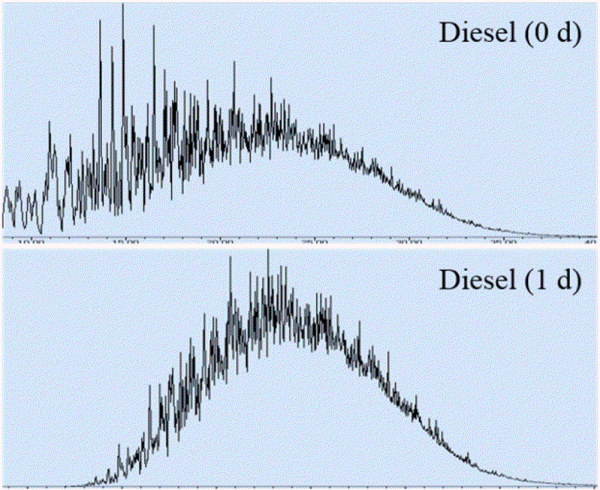
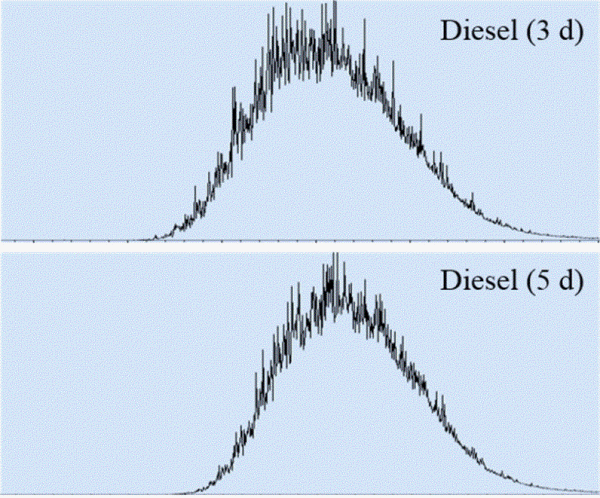
The full scan GC-MS chromatograms for the diesel fuel weathered by heating at 70°C are shown in Fig. 1 along with the chromatogram for the sediment extract. The chromatograms exhibiting thousands of peaks overlapped to one another indicated the presence of a variety of hydrocarbons that exist in the diesel and the diesel-impacted sediment (Sauer and Uhler 1994, Wang et al. 1995). The ratio of C3-naphthalenes and C2-phenanthrenes/ anthracenes (referred to as N3/P2 ratio) are shown in Table 2 as a quantifiable diesel weathering indicator suggested by Douglas et al. (1994). As the diesel fuel was heated, the weight of diesel decreased gradually to a final weight loss of 67% at 5 days due to the evaporation of relatively smaller molecular weight, volatile hydrocarbons. As a result, the center of mass for the full scan chromatograms moved to the right (i.e., towards longer retention time at GC) and the N3/P2 ratio decreased indicating the progress of the weathering process. Smaller N3/P2 ratios indicated higher degree of weathering as C3-naphthalenes exhibit higher volatilities than C2- phenanthrenes/anthracenes (Douglas et al. 1994).
Both the visual inspection of the chromatograms and the N3/P2 ratio suggest that the diesel fuel needs to be heated at 70°C for approximately 4 days to obtain a sample with a similar degree of weathering as the original diesel-impacted sediment. As a result, the weathered diesel spiked into the original sediment sample to obtain sediments with different NAPL contents was prepared by heating at 70°C for 4 days.
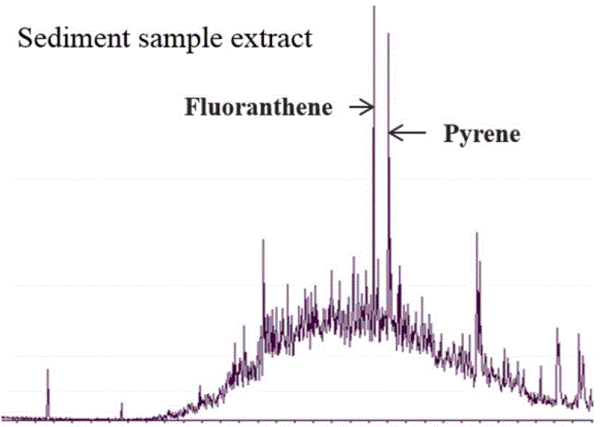
In the full scan chromatogram of the sediment extract, some distinguishable parent-PAH peaks were identified (e.g., fluoranthene and pyrene marked in Fig. 1), which could not be found in the chromato-grams for the weathered diesel. The ratios of selected parent-PAHs and alkylated-PAH groups, (ANTH)/(C3-NAPH) and (PYR)/(C2-PHEN/ANTH), were also substantially greater for the original sediment than for the weathered diesel samples (see Table 3). These results suggest that some significant portion of parent-PAHs in the sediment may have originated from a non-petroleum source such as urban runoff or atmospheric deposition. PAHs from non-petroleum sources exhibited much greater parent- to alkylated-PAH ratios compared to the petroleum-derived PAHs (Hawthorne et al. 2006).
|
Fig. 1. The full scan GC-MS chromatograms for the No. 2 diesel fuel weathered by heating at 70°C for 0, 1, 3, and 5 days, and the sediment extract. |
3.2 Activated carbon performance for weathered diesel-spiked sediment
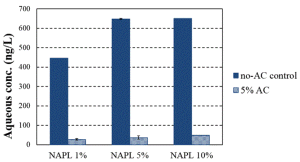
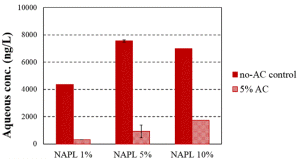
The freely-dissolved equilibrium PAH concent-rations for sediments with 1, 5 and 10% NAPL contents treated with 5 dry weight % of AC for one month are shown in Fig. 2. The results for the untreated sediments with different NAPL contents (i.e., no-AC controls) are shown in parallel for comparison. The results indicated that the freely- dissolved concentrations decreased substantially by the amendment of 5% AC for all sediments with different NAPL contents. For 10% NAPL contents, the freely-dissolved concentration was reduced by 77% as total PAHs (sum of total parent- and alkylated-PAHs). The results suggest that AC retain its sorption capability and can effectively reduce the freely-dissolved PAH concentrations in sediment with a NAPL content of at least 10%.
For parent-PAHs, the freely-dissolved concent-rations were reduced by 94%, 94% and 92%, for the 1, 5 and 10% NAPL contents, respectively, showing almost identical AC performance for all sediment samples. In contrast, for alkylated-PAHs, the percent reduction in the freely-dissolved con-centrations decreased with an increase in the NAPL content. For 1, 5 and 10% NAPL contents, the freely-dissolved concentrations for total alkylated- PAH were 93%, 88% and 75%, respectively.
A possible explanation for these results is the different nature of PAHs in the original sediment and PAHs in weathered diesel spiked into the sediment. Taking the PAH concentrations for the diesel spiked into the sediment, which is heated for 4 days, as the mean of the concentrations for diesel weathered for 3 and 5 days (which are quantified in this study and shown in Table 3), the ratio of the PAHs spiked as weathered diesel and the PAHs in the original sediment can be calculated. For ANTH, PYR, C3-NAPH and C2-PHEN/ANTH, the ratios were 0.07, 0.16, 0.57 and 0.33, respectively, showing much higher values for the alkylated-PAHs than the parent-PAHs. Therefore, if AC performance is different for PAHs in the original sediment and those from the spiked weathered diesel, the effect of NAPL contents on the AC performance should be more pronounced for alkylated-PAHs.
The nature of PAHs in the original sediment and those in the weathered diesel can be different for several reasons. Firstly, although the weathered diesel was prepared with the sediment N3/P2 ratio as a reference, the properties and chemical com-position of the NAPL in the field sediment should be substantially different from the weathered diesel prepared by heating. In addition to volatilization, biodegradation, dissolution and photooxidation con-tribute to the weathering of petroleum in the field (Dutta and Harayama 2000). The NAPL in the original sediment should also have contacted with sediment much longer than the spiked weathered diesel, which was mixed with the sediment for only 15 days. As mentioned in the previous section, some fraction of PAHs may have originated from non-petroleum sources and thus, may be associated with sediment in a different manner than those originating from diesel.
It should be noted, however, that the differential performance of AC for PAHs in field sediments and those in laboratory-weathered petroleum products freshly added to sediment should be verified by additional work.
Despite the reduction of AC performance for alkylated-PAHs for sediments with NAPL contents of 5 and 10% compared to the original sediment having a NAPL content of 1%, the reductions in the freely-dissolved concentrations were significant (88% and 75%, respectively). This indicates that AC is still a dominant phase for alkylated-PAHs as well as parent-PAHs with NAPL contents of at least 10%.
In regard to the effectiveness of AC amendment to reduce the overall PAH risk to sediment biota for sediments with appreciable NAPL contents, more studies will be needed to investigate relevant factors for PAH exposure in addition to the freely- dissolved concentration. It is questionable whether AC amendment effectively reduces the PAHs present as oil emulsions in sediment pore-water. By visual observation in the experiments, oil sheens were not completely removed from sediment pore-water after the AC amendment. The residual oil sheen in sediment pore-water may contain PAHs, which might be easily taken up by sediment organisms. The effect of AC amendment on the biological uptake and the concentrations in various phases in the sediment (e.g., oil emulsions, free oil phase, sediment-bound oil, etc.) should be verified for full demonstration of the effectiveness of AC amendment for NAPL-impacted sediments.
4. Conclusions
This study verifies that AC can effectively reduce the freely-dissolved PAH concentrations in sediments for NAPL contents of up to 10%. The freely-dissolved equilibrium concentrations were reduced by 93%, 88% and 77% as total PAHs compared to the no-AC controls for sediments with NAPL contents of 1%, 5% and 10%, respectively, prepared by spiking weathered diesel into the field-collected sediment by heating. The results of this study suggests that in-situ AC amendment can be a plausible option for the remediation of petroleum-impacted sediments with relatively high NAPL contents.